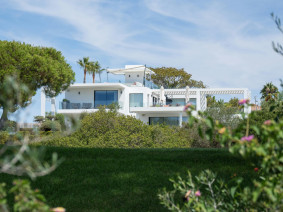
The reasons that drove the high demand for homes in resorts from 2021 and 2022 are still valid and even stronger. Pedro Fontainhas, executive director of the Portuguese Association of Residential Tourism and Resorts reveals to Diário Imobiliário that the summer and the rest of this year will continue with a solid demand for this type of product.
Despite some 'clouds' of uncertainty due to rising costs of construction materials, rising inflation, interest rates, how do you currently analyze the market for resorts and residential tourism?
The residential and resort tourism market has shown signs of a very positive evolution with demand exceeding expectations.
Statistics indicate that home prices continue to rise at resorts, as does the number of transactions, is this a scenario to keep?
Households have not only increased in resorts, nor just in Portugal. The rise in prices is widespread and reflects the situation on both the supply and demand sides. There is competitive space for a certain price increase caused by the increase in construction costs and the increase in demand for quality products with differentiating characteristics.
With the current dynamics on the demand side, it is foreseeable that the number of transactions will continue to increase. At least as long as it is possible to find materials and labor available and bureaucratic deadlines fast enough.
What are the biggest difficulties facing the residential tourism market today? A shortage of supply to the existing demand?
The economic context remains favorable to investment in real property, if not so much because of the pandemic, then because of the war, inflation, the costs of energy and construction materials and the low remuneration of financial investments.
But this context can also affect supply in the more or less near future. The construction sector already faces, among other challenges, significantly increased costs of imported materials such as energy and metallurgy. It is possible that, if they persist and worsen, the difficulties in construction will lead to an increase in prices and a reduction in the number of transactions carried out.
We also have concerns that are subject to political intervention, such as betting on Portugal's fiscal competitiveness and reducing bureaucratic licensing deadlines. And we are concerned about the orientation of the Recovery and Resilience Plan which, in addition to generally ignoring residential tourism, could have the effect of absorbing a good part of the available workforce for public works.
In terms of tourism, we face the difficulty of hiring qualified people for the needs that arise.
Is luxury real estate still on the rise?
Luxury real estate continues and shows signs of continuing to rise in our country. We are targeting a Premium segment, with high purchasing power, whose five-year impact on the economy, according to an APR study, is more than six times the initial investment. It is a stable, non-seasonal investment attraction that attracts more investment and generates jobs and wealth in various sectors.
In this segment, Portugal clearly ranks first among the best offers at European level. To our geographic location, climate, hospitality, gastronomy, infrastructure, natural diversity – among dozens of other unrepeatable assets – is added a residential product offer in world-class resorts and repeatedly awarded from the architectural, engineering and environmental sustainability points of view.
How do you see the future of the residential tourism market in Portugal?
The reasons that drove the high demand for homes in resorts from 2021 and 2022 are still valid and even stronger. These reasons are related to the new housing requirements created by the pandemic, requirements that become increasingly viable as companies and people adopt more flexible hours and greater labor mobility. These novelties have transformed the rationale of buying real estate into a resort. In the traditional paradigm, the house would be used for weekends, holidays or an investment with a view to earning an income; a second home, a place to live after retirement. But it would also be a capital tie, a second credit, an expense on top of that of permanent residence. When it becomes possible and desirable to live there, the reasoning becomes that of anticipating for today a lifestyle that was previously idealized for a long time from now. Therefore, we believe that the summer and the rest of this year will continue with a solid demand for this type of product, and we see the future of the residential tourism market in Portugal with optimism.
Font: Diário Imobiliário